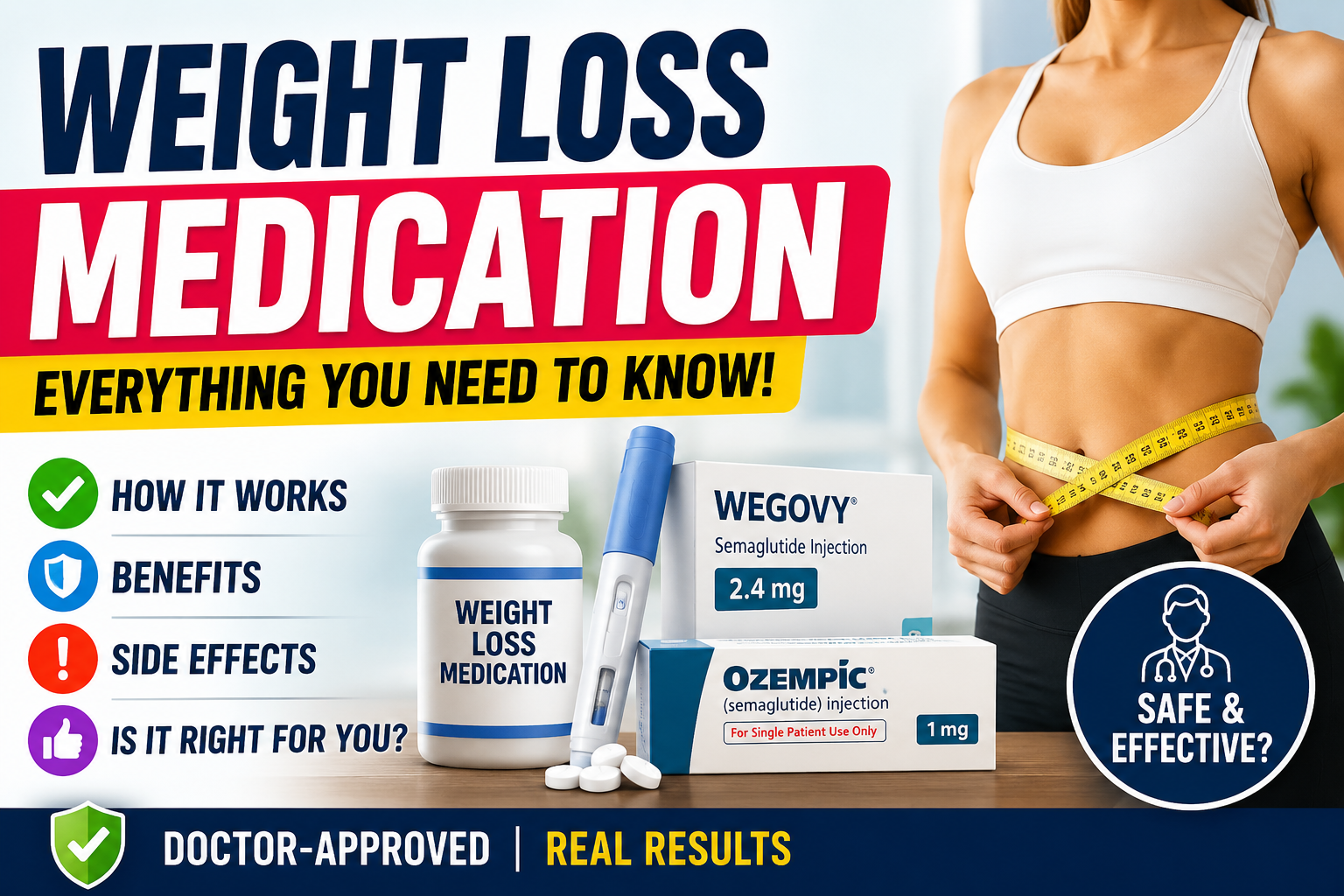
Weight Loss Medication: Everything You Need to Know Before Using It
Weight loss can be challenging for many people, especially when diet and exercise alone do not produce the desired results. In recent years, weight loss medication has become increasingly popular in the United States as more people search for effective ways to manage obesity and improve their health.
Weight loss medications are designed to support healthy weight management when combined with proper nutrition, physical activity, and lifestyle changes. In this guide, we will explain how weight loss medications work, their benefits, possible side effects, and important things you should know before using them.
What Is Weight Loss Medication?
Weight loss medication refers to prescription or approved medicines that help people lose weight by reducing appetite, controlling cravings, or improving how the body processes food.
These medications are usually recommended for:
- Adults with obesity
- Individuals with a high Body Mass Index (BMI)
- People with weight-related health conditions such as diabetes or high blood pressure
Weight loss medication is not a magic solution. It works best when combined with healthy lifestyle habits.
How Weight Loss Medications Work
Different medications work in different ways. Some reduce hunger, while others help the body absorb fewer calories.
Common Ways Weight Loss Medications Help
- Suppress appetite
- Increase feelings of fullness
- Reduce food cravings
- Slow digestion
- Improve blood sugar control
Doctors choose medications based on a person’s health condition, weight goals, and medical history.
Popular Weight Loss Medications in the USA
Several prescription medications are currently used for weight management in the United States.
Common Weight Loss Medicines
- Ozempic
- Wegovy
- Mounjaro
- Phentermine
- Contrave
These medications should only be used under medical supervision.
Benefits of Weight Loss Medication
When used properly, weight loss medications may provide several health benefits.
Potential Benefits
- Faster weight loss progress
- Reduced appetite and cravings
- Improved blood sugar levels
- Better energy levels
- Lower risk of obesity-related diseases
- Increased motivation for healthy habits
Many patients experience better confidence and improved overall wellness after achieving healthier body weight.
Possible Side Effects
Like all medications, weight loss drugs can cause side effects. Some people experience mild symptoms, while others may have stronger reactions.
Common Side Effects
- Nausea
- Headaches
- Constipation
- Diarrhea
- Fatigue
- Dizziness
- Stomach discomfort
It is important to speak with a healthcare professional if side effects become severe or persistent.
Who Should Avoid Weight Loss Medication?
Weight loss medication may not be suitable for everyone.
People Who Should Consult a Doctor First
- Pregnant women
- Individuals with heart disease
- People with severe digestive disorders
- Patients with certain thyroid conditions
- Individuals taking multiple medications
Medical guidance is essential before starting any weight loss treatment.
Natural Weight Loss Still Matters
Although medication can help, healthy habits remain the foundation of successful long-term weight management.
Healthy Habits to Combine With Medication
- Eat balanced meals
- Exercise regularly
- Drink enough water
- Sleep properly
- Manage stress
- Avoid processed foods
Combining medication with lifestyle changes often produces the best results.
Are Weight Loss Medications Safe?
Most FDA-approved weight loss medications are considered safe when used correctly under professional supervision. However, safety depends on:
- Proper dosage
- Medical history
- Lifestyle habits
- Regular health monitoring
Never take weight loss medications without consulting a licensed healthcare provider.
Tips for Choosing the Right Weight Loss Treatment
Choosing the right treatment depends on your body, goals, and overall health condition.
Important Questions to Ask Your Doctor
- What are the risks and benefits?
- How long should I take the medication?
- What side effects should I expect?
- Will it interact with my current medications?
- What lifestyle changes should I follow?
Understanding your treatment plan can improve safety and long-term success.
Final Thoughts
Weight loss medication can be a useful tool for people struggling with obesity or weight-related health problems. Modern treatments have helped many individuals achieve healthier lifestyles and better long-term results.
However, medication alone is not enough. Sustainable weight loss requires healthy eating, regular exercise, proper sleep, and consistency. Before starting any weight loss medication, always consult a qualified healthcare professional to determine the safest and most effective option for your needs.
With the right guidance and commitment, healthy weight management is possible.
Frequently Asked Questions (FAQs)
What is the best medication for weight loss?
The best medication depends on your health condition, weight goals, and doctor’s recommendation.
Can weight loss medication work without exercise?
Medication may help, but combining it with exercise and healthy eating produces better results.
Are weight loss medications FDA-approved?
Many prescription medications used in the USA are FDA-approved for weight management.
How quickly do weight loss medications work?
Results vary depending on the medication, lifestyle, and individual body response.
Can I stop taking weight loss medication anytime?
Always consult your doctor before stopping any prescribed medication.