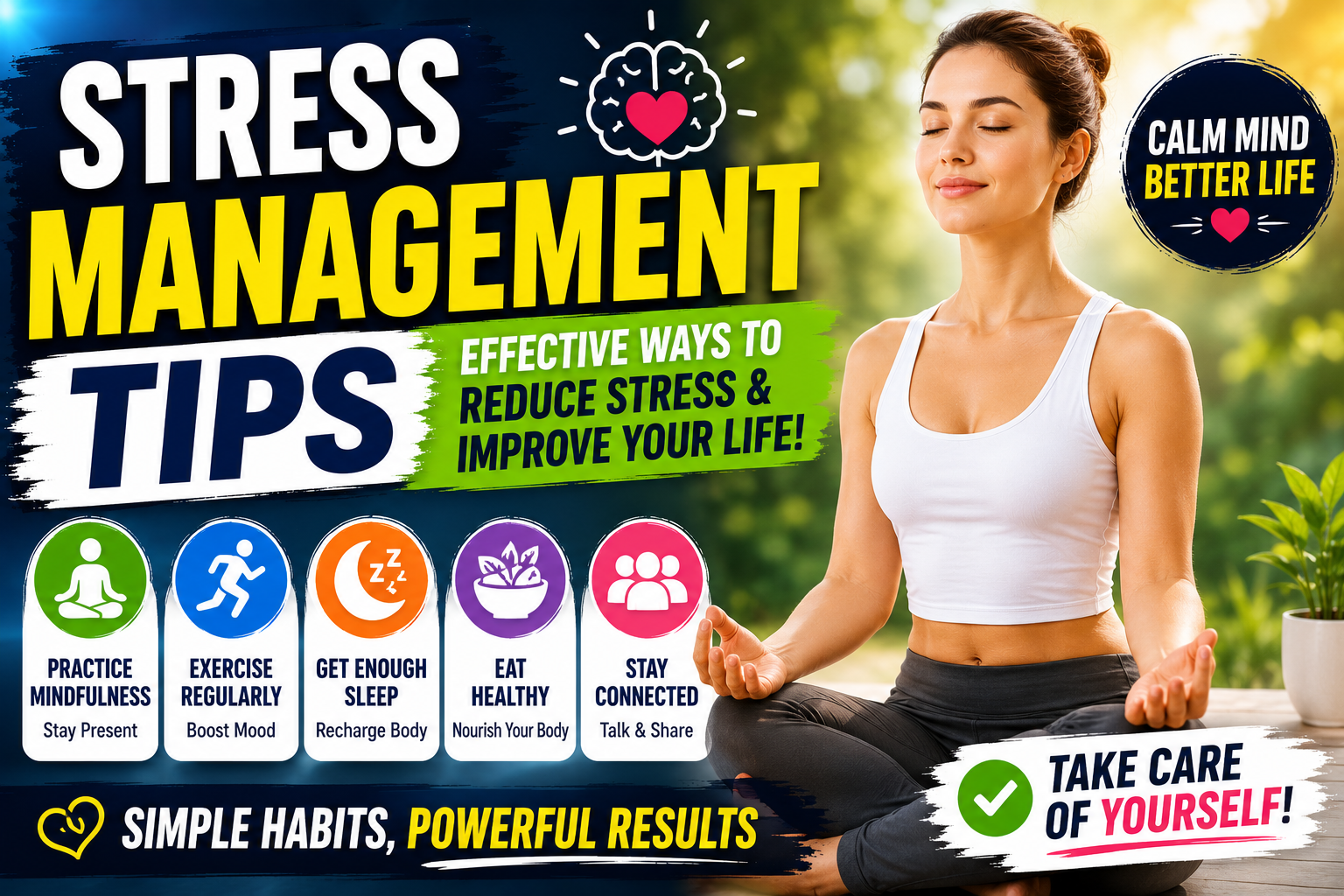
Stress Management Tips: Effective Ways to Reduce Stress and Improve Your Health
Stress has become a common part of modern life. Whether it’s work responsibilities, financial concerns, family obligations, or health challenges, stress can affect both physical and mental well-being. While occasional stress is normal, chronic stress can negatively impact your health and quality of life.
The good news is that there are many effective ways to manage stress naturally. By adopting healthy habits and learning practical coping strategies, you can improve your emotional balance, boost productivity, and support long-term wellness.
In this guide, we’ll explore the best stress management tips that can help you live a healthier and more peaceful life.
What Is Stress?
Stress is the body’s natural response to challenges or demands. When faced with a stressful situation, your body releases hormones such as adrenaline and cortisol, preparing you to respond.
While short-term stress can sometimes be beneficial, long-term stress may contribute to various health problems.
Common Symptoms of Stress
Physical Symptoms
- Headaches
- Fatigue
- Muscle tension
- Digestive issues
- Sleep disturbances
Emotional Symptoms
- Anxiety
- Irritability
- Mood swings
- Feeling overwhelmed
- Difficulty concentrating
Recognizing these signs early can help you take action before stress affects your health.
Why Stress Management Is Important
Managing stress effectively offers numerous health benefits.
Benefits of Stress Management
- Improved mental health
- Better sleep quality
- Stronger immune system
- Lower blood pressure
- Increased productivity
- Better relationships
- Improved overall well-being
Learning how to manage stress is an essential part of maintaining a healthy lifestyle.
1. Practice Regular Physical Activity
Exercise is one of the most effective ways to reduce stress naturally.
Best Exercises for Stress Relief
- Walking
- Jogging
- Swimming
- Cycling
- Yoga
- Strength training
Physical activity helps release endorphins, often called “feel-good” hormones, which improve mood and reduce tension.
2. Prioritize Quality Sleep
Lack of sleep can increase stress levels and make it harder to cope with daily challenges.
Tips for Better Sleep
- Maintain a consistent sleep schedule
- Limit screen time before bed
- Create a relaxing bedtime routine
- Keep your bedroom cool and comfortable
Aim for 7–9 hours of sleep each night for optimal health.
3. Practice Deep Breathing Techniques
Deep breathing can quickly calm the nervous system and reduce feelings of stress.
Simple Deep Breathing Exercise
- Sit comfortably.
- Inhale slowly through your nose for four seconds.
- Hold your breath for four seconds.
- Exhale slowly through your mouth for six seconds.
- Repeat for several minutes.
This technique can help reduce anxiety and promote relaxation.
4. Maintain a Healthy Diet
The foods you eat can significantly affect your mood and stress levels.
Stress-Reducing Foods
- Leafy green vegetables
- Fatty fish
- Berries
- Nuts and seeds
- Whole grains
- Avocados
Avoid excessive caffeine, sugar, and processed foods, which may worsen stress symptoms.
5. Stay Connected With Loved Ones
Social support plays an important role in emotional well-being.
Benefits of Social Connections
- Reduced feelings of loneliness
- Increased emotional support
- Better coping skills
- Improved mood
Spending time with family and friends can help you manage life’s challenges more effectively.
6. Try Meditation and Mindfulness
Mindfulness practices help you focus on the present moment and reduce negative thinking.
Benefits of Meditation
- Reduced anxiety
- Improved focus
- Better emotional control
- Increased self-awareness
Even 10 minutes of daily meditation can provide noticeable benefits.
7. Manage Your Time Effectively
Poor time management often contributes to stress and overwhelm.
Time Management Tips
- Create daily priorities
- Break large tasks into smaller steps
- Avoid procrastination
- Use a planner or calendar
- Set realistic goals
Better organization can reduce stress and improve productivity.
8. Limit Exposure to Negative News and Social Media
Constant exposure to negative information can increase stress and anxiety.
Healthy Digital Habits
- Set screen-time limits
- Take social media breaks
- Follow positive and educational content
- Avoid excessive news consumption
Maintaining a healthy balance can improve mental well-being.
9. Engage in Activities You Enjoy
Making time for hobbies and enjoyable activities can help reduce stress levels.
Stress-Relieving Hobbies
- Reading
- Gardening
- Painting
- Listening to music
- Cooking
- Photography
Enjoyable activities provide a mental break from daily pressures.
10. Learn to Say No
Taking on too many responsibilities can lead to burnout and chronic stress.
Healthy Boundary-Setting Tips
- Know your limits
- Prioritize important tasks
- Avoid overcommitting
- Communicate clearly
Protecting your time and energy is essential for long-term well-being.
Common Stress Management Mistakes to Avoid
Many people unintentionally increase their stress by adopting unhealthy coping mechanisms.
Avoid These Habits
- Overeating
- Excessive alcohol consumption
- Smoking
- Ignoring sleep
- Avoiding problems
- Isolating yourself from others
Healthy coping strategies provide better long-term results.
Final Thoughts
Stress is a natural part of life, but it doesn’t have to control your health or happiness. By implementing these stress management tips, you can reduce anxiety, improve your emotional well-being, and enhance your overall quality of life.
Remember that managing stress is an ongoing process. Small, consistent changes can make a significant difference over time. Focus on healthy habits, prioritize self-care, and seek support when needed.
A calmer mind often leads to a healthier and more fulfilling life.
Frequently Asked Questions (FAQs)
What is the best way to manage stress?
Regular exercise, quality sleep, mindfulness practices, and healthy social connections are among the most effective stress management strategies.
Can stress affect physical health?
Yes. Chronic stress can contribute to high blood pressure, digestive problems, sleep disorders, and weakened immunity.
How does exercise reduce stress?
Exercise releases endorphins, improves mood, and helps reduce tension and anxiety.
Can poor sleep increase stress?
Yes. Lack of sleep can make it more difficult to cope with daily stressors and may worsen anxiety.
How long does it take to reduce stress?
Results vary, but consistent healthy habits can lead to noticeable improvements within a few weeks.