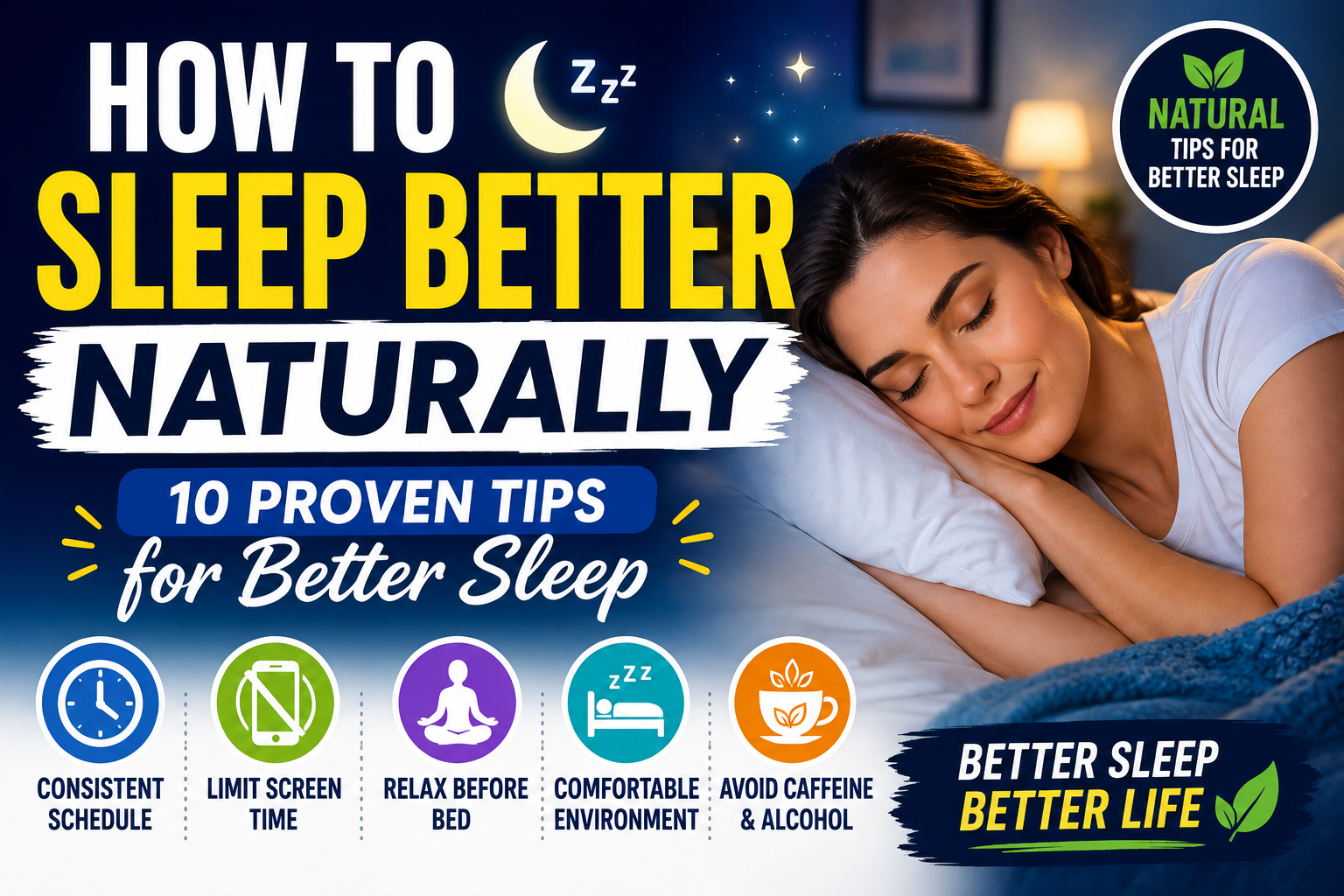
💤 How to Sleep Better Naturally: 10 Proven Tips for Better Sleep 🌙
Meta Title: How to Sleep Better Naturally: 10 Proven Tips for Better Sleep
Meta Description: Learn how to sleep better naturally with 10 simple, evidence-based sleep tips. Improve your sleep quality, bedtime routine, and nighttime habits for more restful sleep.
🌙 Introduction: Why Quality Sleep Matters
Do you wake up feeling tired even after spending hours in bed? 😴 You’re not alone.
Getting enough high-quality sleep is essential for your physical health, mental well-being, energy levels, memory, and daily performance. While occasional sleepless nights are common, consistently poor sleep can affect how you feel and function throughout the day.
The good news is that you can often improve your sleep naturally by changing a few everyday habits.
If you’re searching for how to sleep better naturally, these 10 practical tips can help you create a healthier bedtime routine and improve your overall sleep quality. 🌿✨
💤 1. Keep a Consistent Sleep Schedule ⏰
One of the simplest ways to improve sleep is to maintain a regular sleep and wake schedule.
Try to:
- 🌙 Go to bed at approximately the same time each night
- ☀️ Wake up at the same time every morning
- 📅 Keep your schedule consistent on weekends
- 🛌 Give yourself enough time for sleep
A consistent schedule helps your body’s internal clock, also known as the circadian rhythm, stay aligned.
📱 2. Reduce Screen Time Before Bed
Phones, tablets, computers, and televisions can make it harder to transition into sleep.
Try creating a 30–60 minute screen-free period before bedtime.
Instead, you could:
📖 Read a book
🧘 Practice gentle relaxation
🎵 Listen to calming music
📝 Write down tomorrow’s tasks
🌿 Take a warm shower
Creating a relaxing pre-bed routine can signal to your brain that it’s time to wind down.
☕ 3. Watch Your Caffeine Intake
Coffee, energy drinks, tea, and other caffeinated beverages can interfere with sleep, especially when consumed later in the day.
If you’re having trouble sleeping, consider limiting caffeine in the afternoon and evening.
☕ Tip: If you are sensitive to caffeine, you may need to stop consuming it earlier in the day.
🛏️ 4. Create a Comfortable Sleep Environment
Your bedroom can have a major impact on your sleep quality.
Aim for a room that is:
🌡️ Comfortably cool
🌑 Dark
🔇 Quiet
🛏️ Comfortable
Blackout curtains, an eye mask, earplugs, or a comfortable pillow may help create a more sleep-friendly environment.
🧘 5. Practice Relaxation Before Bed
Stress and racing thoughts can make it difficult to fall asleep.
Try a relaxing activity before bedtime:
🧘 Deep breathing
🧎 Gentle stretching
📖 Reading
🎵 Calm music
📝 Journaling
🌿 Meditation
Even 5–10 minutes of relaxation can help you transition from a busy day to a calmer bedtime routine.
🏃 6. Exercise During the Day 💪
Regular physical activity can support better sleep and overall health.
You don’t necessarily need an intense workout. Activities such as:
🚶 Walking
🚴 Cycling
🏊 Swimming
🏋️ Strength training
🧘 Yoga
can all become part of a healthy routine.
For some people, exercising very close to bedtime can feel stimulating, so experiment with timing that works best for you.
☀️ 7. Get Natural Light During the Day
Spending time in natural daylight can help support your body’s circadian rhythm.
Try getting outside during the morning or daytime:
☀️ Take a morning walk
🌳 Spend time outdoors
🚶 Walk during your lunch break
🏡 Sit outside when possible
Daytime light exposure and a darker environment at night can help reinforce your body’s natural sleep-wake cycle.
🍽️ 8. Be Mindful of Late-Night Meals
Going to bed immediately after a very large meal may make some people uncomfortable.
If late-night eating affects your sleep, consider:
🥗 Eating dinner earlier
🍽️ Choosing lighter evening meals
🌶️ Limiting foods that trigger heartburn
🥤 Avoiding excessive fluids right before bed
However, individual needs vary. The goal is to find an evening routine that keeps you comfortable.
🍷 9. Don’t Rely on Alcohol for Sleep
Alcohol can make some people feel sleepy initially, but it can interfere with sleep quality later in the night.
If you’re trying to sleep better naturally, avoid using alcohol as a sleep aid.
Instead, create a calming bedtime routine with relaxing activities such as reading, stretching, or deep breathing. 🌙
🧠 10. Manage Stress and Racing Thoughts
A busy mind is one of the most common reasons people struggle to fall asleep.
Try a simple “brain dump” before bed. 📝
Write down:
✅ Things you need to do tomorrow
✅ Important thoughts
✅ Concerns you want to address later
✅ Your priorities for the next day
This can help you separate nighttime from daytime responsibilities.
🌟 Bonus: Build a Relaxing Nighttime Routine
Your brain can learn to associate certain activities with bedtime.
Try creating a simple routine:
🌙 9:00 PM — Dim the lights
📱 9:30 PM — Put away screens
🚿 9:40 PM — Take a warm shower
📖 10:00 PM — Read or relax
😴 10:30 PM — Go to bed
The exact times aren’t important. Consistency is what matters most.
🚫 Common Sleep Mistakes to Avoid
If you want to improve your sleep quality, try avoiding these habits:
❌ Using your phone in bed for hours
❌ Drinking caffeine late in the day
❌ Keeping an irregular sleep schedule
❌ Working in bed
❌ Eating very heavy meals immediately before sleep
❌ Using alcohol as a sleep aid
❌ Staying in bed frustrated for long periods
Small changes can make a meaningful difference over time. 🌿
💤 How Much Sleep Do Adults Need?
Most adults need at least 7 hours of sleep per night, although individual needs can vary.
Quality matters too. Sleeping for enough hours but frequently waking up or feeling unrefreshed may indicate that your sleep quality needs attention.
🩺 When Should You Talk to a Doctor?
Natural sleep habits can help many people, but persistent sleep problems shouldn’t be ignored.
Consider speaking with a healthcare professional if you:
⚠️ Frequently struggle to fall or stay asleep
⚠️ Regularly feel extremely tired during the day
⚠️ Snore loudly or wake up gasping
⚠️ Have persistent sleep problems despite improving your habits
Conditions such as insomnia and sleep apnea may require professional evaluation and treatment.
🌙 Final Thoughts
Learning how to sleep better naturally doesn’t require a complicated routine. Start with the basics: maintain a consistent sleep schedule, create a comfortable bedroom, reduce evening screen exposure, stay active during the day, manage stress, and develop a relaxing bedtime routine.
Most importantly, give your body time to adjust. 🌿💤
Better sleep isn’t about perfection—it’s about creating healthy habits that you can maintain night after night.
Tonight, choose one small change and start there. Your future self may thank you. ❤️
❓ Frequently Asked Questions
💤 What is the best natural way to sleep better?
Maintaining a consistent sleep schedule, getting daytime light exposure, exercising regularly, limiting caffeine later in the day, and creating a relaxing bedtime routine are among the most useful habits.
🌙 How can I fall asleep faster naturally?
Try reducing screen exposure before bed, relaxing your body, keeping your bedroom comfortable and dark, and maintaining a consistent sleep schedule.
☕ How late should I avoid caffeine?
Caffeine affects people differently. If you’re having trouble sleeping, try limiting caffeine from the afternoon onward and see whether your sleep improves.
📱 Does using your phone before bed affect sleep?
Evening phone use can make winding down more difficult. Reducing screen time before bed may help you establish a more relaxing nighttime routine.
🩺 When should I seek help for sleep problems?
If sleep difficulties persist, significantly affect your daytime life, or occur alongside symptoms such as loud snoring or gasping during sleep, talk with a healthcare professional.