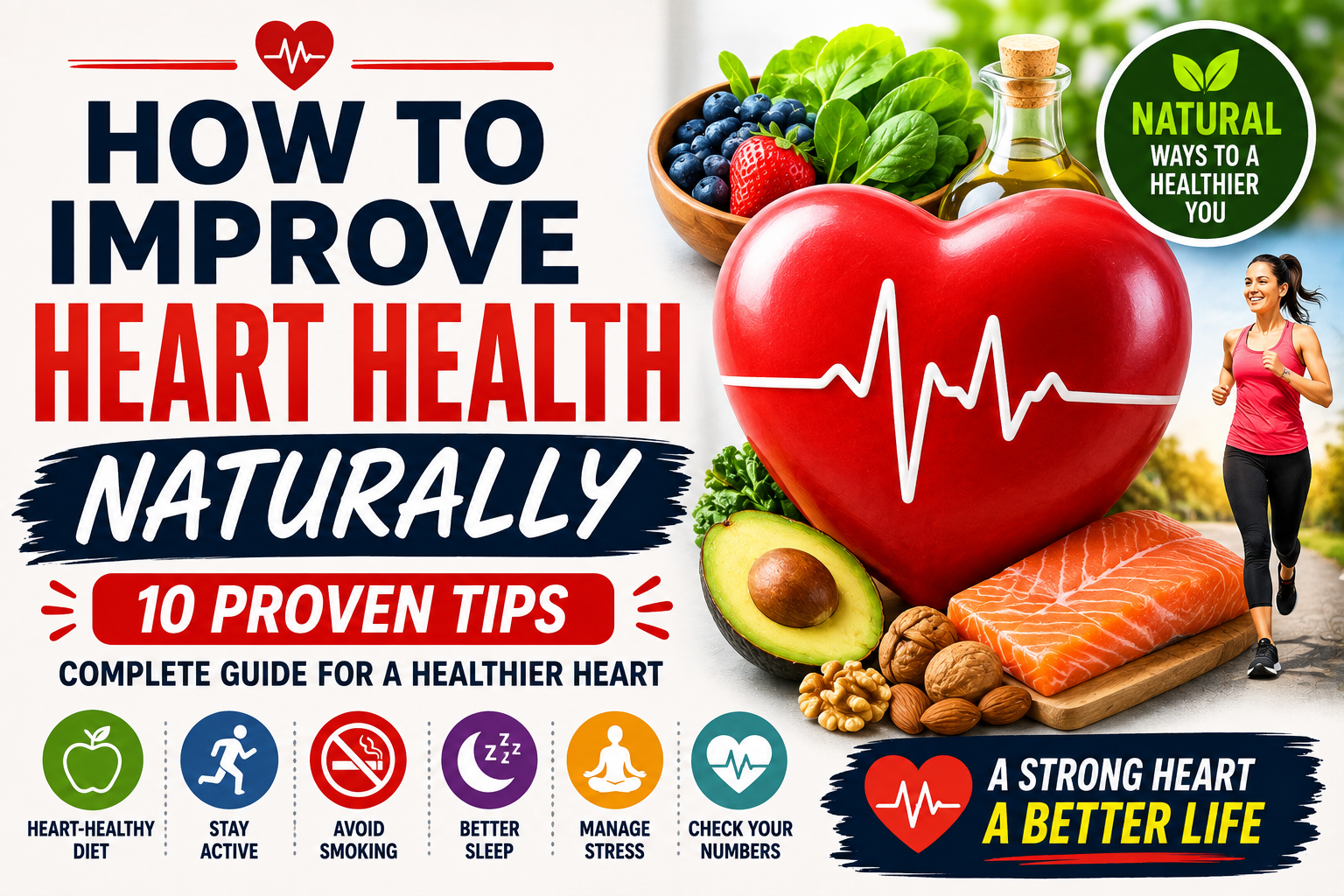
❤️ How to Improve Heart Health Naturally
Your heart works continuously to pump blood and oxygen throughout your body. Taking care of your cardiovascular health is one of the most important things you can do for your long-term wellness. 🌿💪
If you’re searching for how to improve heart health naturally, the good news is that many of the most effective strategies involve simple daily habits rather than complicated routines.
A heart-healthy lifestyle includes nutritious food, regular physical activity, healthy sleep, avoiding nicotine, maintaining a healthy weight, and keeping important health numbers such as blood pressure, cholesterol, and blood sugar in a healthy range. The American Heart Association groups these areas under its Life’s Essential 8™ framework.
In this complete guide, we’ll explore 10 practical ways to support your heart naturally and build healthier habits that can last for years. ❤️
🥗 1. How to Improve Heart Health Naturally With a Heart-Healthy Diet
One of the most powerful places to start is your diet.
Your overall eating pattern matters more than any single “superfood.” A heart-friendly diet emphasizes whole and minimally processed foods while limiting excess added sugars, sodium, saturated fat, and highly processed foods.
🌿 Add More of These Foods
🥦 Vegetables
🍎 Fruits
🌾 Whole grains
🫘 Beans and lentils
🐟 Fish and seafood
🥜 Nuts and seeds
🥑 Avocados
🫒 Olive oil
🍗 Lean protein
🚫 Try to Limit
🍟 Frequent fried foods
🥤 Sugary drinks
🍩 Excess sweets
🥓 Processed meats
🧂 Excess sodium
🍔 Highly processed foods
You don’t need to completely change your diet overnight. Start by replacing one less-healthy choice with a more nutritious option.
For example:
Soda → Water 💧
Chips → Nuts 🥜
White bread → Whole-grain bread 🌾
Processed meat → Fish or beans 🐟🫘
🫒 2. Choose a Mediterranean-Style Eating Pattern
If you’re wondering how to improve heart health naturally through food, a Mediterranean-style eating pattern is an excellent approach to consider.
This style of eating emphasizes:
🫒 Olive oil
🥗 Vegetables
🍅 Tomatoes and other colorful produce
🍓 Fruits
🐟 Fish
🫘 Beans
🥜 Nuts
🌾 Whole grains
The American Heart Association recognizes Mediterranean-style and DASH-style eating patterns as heart-supportive approaches.
You don’t have to follow the diet perfectly. Instead, think of it as a flexible eating pattern centered around nutritious foods.
💡 Simple Mediterranean Meal Idea
🐟 Grilled salmon
🥗 Large vegetable salad
🌾 Whole-grain bread
🫒 Olive-oil-based dressing
🍓 Fresh berries
Delicious, simple, and packed with heart-friendly nutrients. ❤️
🚶 3. How to Improve Heart Health Naturally With Exercise
Regular physical activity is another major part of cardiovascular health.
For most adults, the American Heart Association recommends approximately 150 minutes of moderate-intensity physical activity per week, or 75 minutes of vigorous activity.
You don’t need an expensive gym membership.
🏃 Try These Activities
🚶 Brisk walking
🚴 Cycling
🏊 Swimming
💃 Dancing
🏃 Jogging
🏋️ Strength training
🧘 Yoga
If you’re currently inactive, start small.
A 20–30 minute brisk walk can be a great starting point. You can gradually increase your activity as your fitness improves.
🌟 Easy Weekly Goal
Monday: 🚶 30-minute walk
Tuesday: 🏋️ Strength training
Wednesday: 🚶 30-minute walk
Thursday: 🧘 Light activity
Friday: 🚶 30-minute walk
Saturday: 🚴 Cycling or swimming
Sunday: 🌿 Easy recovery walk
Consistency matters more than doing the hardest workout possible.
🚭 4. Avoid Smoking and Nicotine
If you smoke, quitting is one of the most important lifestyle changes you can make for cardiovascular health.
Nicotine exposure is included in the American Heart Association’s Life’s Essential 8 because tobacco and nicotine exposure can negatively affect cardiovascular health.
This includes exposure from:
🚬 Cigarettes
💨 Vaping products
🚬 Other tobacco products
🌫️ Secondhand smoke
❤️ If You’re Trying to Quit
Consider:
📅 Choosing a quit date
👨⚕️ Talking with a healthcare professional
👨👩👧 Asking family for support
🧠 Identifying your triggers
💪 Preparing healthier alternatives
Quitting isn’t always easy, and setbacks don’t mean you’ve failed.
😴 5. How to Improve Heart Health Naturally Through Better Sleep
Sleep is sometimes overlooked when people talk about cardiovascular health, but it’s an important part of a healthy lifestyle.
The American Heart Association includes sleep as one of its Life’s Essential 8 components and recommends that most adults aim for around 7–9 hours of sleep per night.
🌙 Improve Your Sleep Routine
Try:
🕰️ Going to bed at a consistent time
📱 Limiting screens before bedtime
☕ Avoiding excessive late-day caffeine
🌑 Keeping your bedroom dark
🧘 Practicing relaxation
📖 Reading before bed
Sleep quality matters too. If you regularly have difficulty sleeping or experience symptoms such as loud snoring or gasping during sleep, consider speaking with a healthcare professional.
🩺 6. Monitor Your Blood Pressure
High blood pressure can increase the strain placed on your cardiovascular system.
That’s why monitoring your blood pressure is an important part of learning how to improve heart health naturally.
The American Heart Association identifies blood pressure as one of the key health factors in its Life’s Essential 8 framework.
❤️ Habits That Support Healthy Blood Pressure
🥗 Eat a balanced diet
🧂 Be mindful of sodium
🚶 Exercise regularly
⚖️ Maintain a healthy weight
😴 Sleep adequately
🚭 Avoid nicotine
🧘 Manage stress
If you’ve been diagnosed with high blood pressure, lifestyle changes should complement—not replace—medical treatment recommended by your healthcare professional.
🩸 7. Keep an Eye on Cholesterol
Cholesterol plays important roles in the body, but unhealthy cholesterol levels can contribute to cardiovascular disease.
A healthcare professional can check your cholesterol through a blood test and help explain what your results mean for your individual risk.
🥑 Heart-Friendly Food Choices
Try incorporating:
🐟 Fatty fish
🥜 Nuts
🫘 Beans
🌾 Whole grains
🥦 Vegetables
🫒 Olive oil
Replacing foods high in saturated fat with foods containing unsaturated fats can support a heart-healthier eating pattern.
Remember that some people may need medication to manage cholesterol. Never stop prescribed medication without talking to your healthcare professional.
🍬 8. Manage Blood Sugar
Blood sugar is another important factor in cardiovascular health.
Persistently high blood glucose can contribute to damage throughout the body, including the heart and blood vessels. The American Heart Association includes blood glucose among its key cardiovascular health factors.
🌿 Healthy Habits That Can Help
🥗 Choose nutritious foods
🚶 Stay physically active
⚖️ Maintain a healthy weight
😴 Get enough sleep
🧘 Manage stress
If you have diabetes or prediabetes, work with your healthcare team to develop an individualized plan.
⚖️ 9. Maintain a Healthy Weight
Maintaining a healthy weight can support cardiovascular health, but weight loss shouldn’t be about crash diets or extreme restrictions.
If weight loss is appropriate for you, focus on sustainable habits.
🌟 Healthy Weight-Loss Habits
🥗 Eat more nutrient-dense foods
🍽️ Pay attention to portions
🚶 Stay active
💧 Drink water
😴 Prioritize sleep
🧘 Manage stress
For more information, read our related guide:
👉 How to Lose Belly Fat Naturally
You can also explore:
👉 Best Weight Loss Diets for 2026
A healthy weight-management strategy should focus on your overall health rather than chasing rapid results.
🧘 10. Manage Stress for Better Heart Health
Learning how to improve heart health naturally isn’t only about food and exercise. Your mental well-being matters too.
Long-term stress can make it harder to maintain healthy behaviors and may contribute to poor sleep, inactivity, and unhealthy eating habits.
🌿 Simple Ways to Relax
🧘 Meditation
🌳 Walking outdoors
🎵 Listening to music
📖 Reading
🫁 Deep breathing
👨👩👧 Spending time with loved ones
🙏 Practicing gratitude
Try taking just 5–10 minutes each day to slow down and relax.
🥗 10 Heart-Healthy Foods to Add to Your Grocery List
If you want to know how to improve heart health naturally through everyday nutrition, start with your grocery list.
🥦 1. Leafy Greens
Spinach, kale, and other leafy vegetables can be part of a nutrient-rich diet.
🐟 2. Fatty Fish
Salmon and other fish provide protein and omega-3 fatty acids.
🫘 3. Beans
Beans provide plant protein and fiber and are easy to add to soups, salads, and meals.
🥜 4. Nuts
Nuts can provide unsaturated fats, protein, and other nutrients.
🌾 5. Oatmeal
Oats are a whole grain and provide soluble fiber.
🫒 6. Olive Oil
Olive oil is a source of unsaturated fat and fits well into Mediterranean-style eating patterns.
🍓 7. Berries
Berries are an easy way to add fruit to breakfast, yogurt, or snacks.
🥑 8. Avocado
Avocados provide mostly unsaturated fat and can be added to salads and whole-grain toast.
🍎 9. Apples
Apples are convenient, portable, and contain fiber.
🥕 10. Colorful Vegetables
Carrots, peppers, tomatoes, broccoli, and other colorful vegetables can make meals more nutritious and enjoyable.
❤️ How to Improve Heart Health Naturally: A Simple Daily Routine
You don’t need to completely transform your lifestyle in one day.
Try this simple routine:
☀️ Morning
💧 Drink water
🍳 Eat a nutritious breakfast
🚶 Take a short walk
🌞 Afternoon
🥗 Choose a balanced lunch
🚶 Take a movement break
💧 Stay hydrated
🌆 Evening
🥦 Eat a balanced dinner
🧘 Take time to relax
📱 Reduce unnecessary screen time
🌙 Night
😴 Aim for 7–9 hours of sleep
Small habits repeated consistently can create meaningful lifestyle changes.
🔗 Helpful Heart-Health Resources
For readers who want reliable medical information, these authoritative resources are useful:
- American Heart Association — Life’s Essential 8: Life’s Essential 8
- American Heart Association — Mediterranean Diet: Mediterranean-Style Eating Guide
- American Heart Association — Cholesterol Guide: How to Control Cholesterol
These links provide additional evidence-based information from a leading U.S. cardiovascular health organization.
🚫 Common Heart-Health Mistakes to Avoid
When learning how to improve heart health naturally, avoid these common mistakes:
❌ Looking for a single “miracle” food
❌ Depending on supplements instead of healthy habits
❌ Following extreme diets
❌ Ignoring high blood pressure
❌ Ignoring cholesterol results
❌ Smoking or vaping
❌ Being inactive for long periods
❌ Sacrificing sleep
❌ Stopping prescribed medication without medical advice
Heart health is a long-term process—not a one-week challenge. ❤️
🩺 When Should You See a Healthcare Professional?
Natural lifestyle habits are important, but they don’t replace professional medical care.
Talk with a healthcare professional if you have:
⚠️ High blood pressure
⚠️ High cholesterol
⚠️ Diabetes or prediabetes
⚠️ A history of heart disease
⚠️ A strong family history of cardiovascular disease
⚠️ Concerns about your cardiovascular risk
And remember: sudden chest pressure or pain, severe shortness of breath, fainting, or other serious symptoms require urgent medical attention rather than home remedies.
🌟 Final Thoughts: How to Improve Heart Health Naturally
If you’re serious about how to improve heart health naturally, focus on the basics.
❤️ Eat a nutritious diet.
🚶 Stay physically active.
🚭 Avoid nicotine.
😴 Get enough quality sleep.
🩺 Monitor important health numbers.
⚖️ Maintain a healthy weight when appropriate.
🧘 Manage stress.
🥗 Choose whole foods more often.
The goal isn’t perfection.
The goal is to make healthier choices consistently and create a lifestyle that supports your heart for years to come. 🌿❤️
Your heart works for you every day—give it the care it deserves. 💪
❓ Frequently Asked Questions
❤️ How to Improve Heart Health Naturally at Home?
Start with simple habits such as eating more whole foods, walking regularly, getting enough sleep, avoiding nicotine, managing stress, and monitoring your blood pressure and cholesterol with appropriate medical guidance.
🥗 What Is the Best Diet for Heart Health?
Mediterranean-style and DASH-style eating patterns are well-established heart-healthy approaches. They emphasize vegetables, fruits, whole grains, beans, nuts, healthy fats, and lean protein.
🚶 How Much Exercise Is Good for Your Heart?
For most adults, the American Heart Association recommends at least 150 minutes of moderate-intensity aerobic activity per week or 75 minutes of vigorous activity.
😴 Does Sleep Affect Heart Health?
Yes. Sleep is one of the eight components of cardiovascular health in the American Heart Association’s Life’s Essential 8 framework, with most adults advised to aim for 7–9 hours per night.
🩸 How Can I Support Healthy Cholesterol Naturally?
Eating a heart-healthy diet, being physically active, avoiding nicotine, and choosing healthier sources of fat can support healthy cholesterol levels. Your healthcare professional can help interpret your cholesterol results and determine whether treatment is needed.
💊 Do Heart Health Supplements Work?
Supplements should not be considered a replacement for a balanced diet, exercise, medical screening, or prescribed treatment. If you’re considering a supplement for cardiovascular health, discuss it with your healthcare professional first.