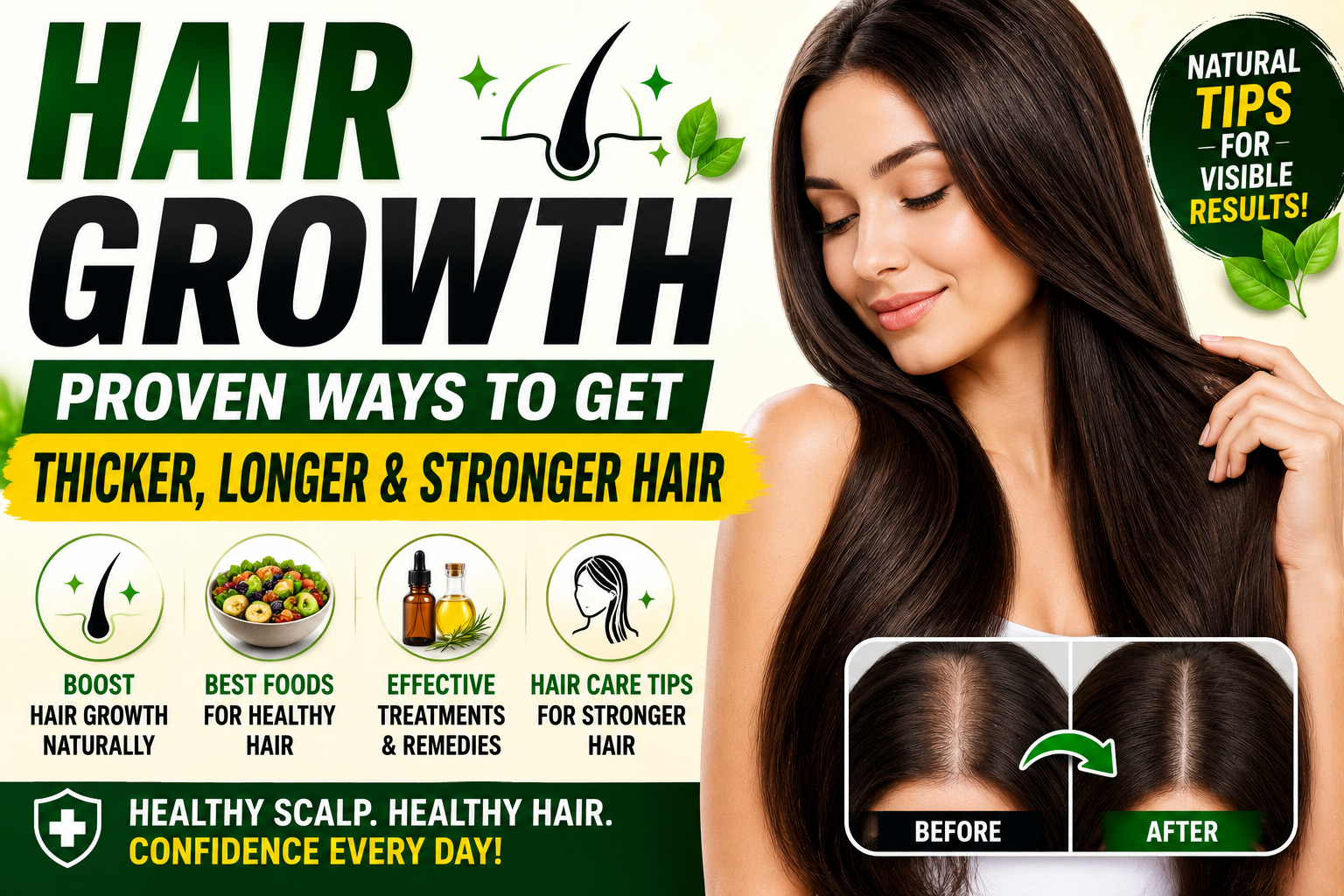
Hair Growth: Proven Ways to Promote Healthy and Strong Hair Naturally
Meta Title: Hair Growth Tips: Best Treatments, Foods & Natural Ways to Grow Hair Faster
Meta Description: Discover the best hair growth tips, treatments, foods, and expert strategies to promote healthy hair growth naturally. Learn how to improve hair thickness and prevent hair loss.
Hair Growth: Proven Ways to Promote Healthy and Strong Hair Naturally
Healthy, thick hair is often associated with confidence, beauty, and overall wellness. However, millions of Americans struggle with slow hair growth, thinning hair, and excessive shedding due to genetics, lifestyle factors, hormonal changes, and medical conditions.
The good news is that understanding how hair grows and adopting evidence-based strategies can help improve hair health and support stronger, healthier growth over time.
In this comprehensive guide, we’ll explore the science behind hair growth, common causes of slow hair growth, and the most effective treatments, lifestyle habits, and nutritional strategies to support healthy hair development.
Understanding the Hair Growth Cycle
Hair growth occurs in a continuous cycle consisting of four main phases:
1. Anagen Phase (Growth Phase)
This is the active growth stage, lasting between two and seven years. During this period, hair follicles continuously produce new hair.
2. Catagen Phase (Transition Phase)
This short phase lasts approximately two to three weeks and marks the transition from active growth to resting.
3. Telogen Phase (Resting Phase)
Hair follicles remain inactive during this stage, which typically lasts around three months.
4. Exogen Phase (Shedding Phase)
Old hair falls out, allowing new hair to grow and replace it.
Disruptions in any part of this cycle can contribute to slower hair growth or increased hair shedding.
What Affects Hair Growth?
Several factors influence hair growth and hair health.
Genetics
Your genes play a major role in determining:
- Hair thickness
- Growth rate
- Hair texture
- Risk of hair loss
Age
As we age, hair growth naturally slows, and hair strands may become thinner.
Hormones
Hormonal imbalances can significantly impact hair growth, including:
- Thyroid disorders
- Menopause
- Pregnancy
- Polycystic ovary syndrome (PCOS)
Nutrition
Hair follicles require essential nutrients to function properly. Poor nutrition can slow growth and increase shedding.
Stress
Chronic stress can disrupt the hair growth cycle and contribute to excessive hair loss.
Best Foods for Healthy Hair Growth
Nutrition is one of the most important factors affecting hair growth.
Protein-Rich Foods
Hair is primarily composed of keratin, a type of protein.
Excellent protein sources include:
- Eggs
- Chicken
- Fish
- Lean beef
- Greek yogurt
- Beans
- Lentils
Omega-3 Fatty Acids
Omega-3 fats support scalp health and reduce inflammation.
Good sources include:
- Salmon
- Sardines
- Walnuts
- Chia seeds
- Flaxseeds
Iron-Rich Foods
Iron deficiency is a common cause of hair thinning.
Foods rich in iron include:
- Spinach
- Red meat
- Lentils
- Pumpkin seeds
- Dark leafy vegetables
Vitamin-Rich Foods
Important vitamins for hair growth include:
- Vitamin D
- Vitamin A
- Vitamin C
- Vitamin E
- Biotin
- Vitamin B12
A balanced diet provides the nutrients necessary for healthy hair production.
Best Treatments for Hair Growth
Several scientifically supported treatments may help improve hair growth.
1. Minoxidil (Rogaine)
Minoxidil is an FDA-approved treatment available in the United States for both men and women.
Benefits include:
- Stimulating hair follicles
- Increasing hair density
- Slowing hair loss
- Promoting hair regrowth
Results typically appear after three to six months of consistent use.
2. Finasteride
Finasteride is an oral prescription medication commonly used for male pattern hair loss.
It works by:
- Reducing DHT hormone levels
- Protecting hair follicles
- Supporting hair preservation and regrowth
3. Platelet-Rich Plasma (PRP) Therapy
PRP therapy has become increasingly popular in hair restoration clinics throughout the USA.
The procedure involves:
- Drawing blood
- Separating growth factors
- Injecting platelet-rich plasma into the scalp
Potential benefits include improved hair density and enhanced follicle activity.
4. Low-Level Laser Therapy (LLLT)
Laser devices may stimulate hair follicles and improve blood circulation to the scalp.
Benefits may include:
- Increased hair thickness
- Reduced shedding
- Improved scalp health
Natural Remedies That May Support Hair Growth
Although scientific evidence varies, several natural approaches may help support healthy hair growth.
Rosemary Oil
Research suggests rosemary oil may improve circulation and stimulate hair follicles.
Scalp Massage
Regular scalp massage may:
- Improve blood flow
- Reduce stress
- Enhance nutrient delivery to hair follicles
Aloe Vera
Aloe vera may help soothe scalp irritation and support a healthy scalp environment.
Pumpkin Seed Oil
Some studies suggest pumpkin seed oil may help improve hair density in certain individuals.
Daily Habits That Promote Hair Growth
Healthy lifestyle habits can support stronger and healthier hair.
Maintain a Balanced Diet
Consuming adequate nutrients helps nourish hair follicles from within.
Manage Stress
Effective stress reduction strategies include:
- Meditation
- Exercise
- Yoga
- Deep breathing
- Quality sleep
Get Enough Sleep
Adults should aim for seven to nine hours of sleep per night to support healthy hair growth and recovery.
Stay Hydrated
Proper hydration supports scalp health and cellular function.
Hair Care Tips for Faster Hair Growth
Following proper hair care practices can reduce breakage and improve hair appearance.
Do:
- Use gentle shampoos
- Condition regularly
- Protect hair from heat damage
- Use wide-tooth combs
- Trim split ends periodically
Avoid:
- Excessive heat styling
- Harsh chemical treatments
- Tight hairstyles
- Frequent bleaching
- Aggressive brushing
Healthy hair retention is just as important as stimulating new growth.
Supplements for Hair Growth
Certain supplements may support hair growth if deficiencies are present.
Common supplements include:
- Biotin
- Iron
- Zinc
- Vitamin D
- Omega-3 fatty acids
- Collagen peptides
Consult a healthcare provider before starting supplements, as unnecessary supplementation may have side effects.
When to See a Doctor About Hair Growth Problems
Consider consulting a healthcare professional if you experience:
- Sudden hair loss
- Severe hair thinning
- Bald patches
- Persistent shedding
- Scalp pain or irritation
- Hair loss accompanied by other symptoms
Early diagnosis often improves treatment outcomes.
Frequently Asked Questions
How fast does hair grow?
On average, scalp hair grows approximately half an inch (1.25 cm) per month, or about six inches per year.
Can hair grow back after thinning?
In many cases, hair regrowth is possible depending on the underlying cause and treatment approach.
Does stress affect hair growth?
Yes. Chronic stress can disrupt the normal hair growth cycle and increase shedding.
Are natural remedies effective?
Some natural remedies may support scalp health and hair growth, but scientific evidence varies.
Final Thoughts
Healthy hair growth requires a combination of proper nutrition, healthy lifestyle habits, appropriate hair care, and, when necessary, evidence-based medical treatments. While there is no overnight solution for hair growth, consistency and early intervention can significantly improve hair health and appearance over time.
If you’re experiencing persistent hair thinning or slow hair growth, consulting a healthcare provider or dermatologist can help identify underlying causes and create a personalized treatment plan.