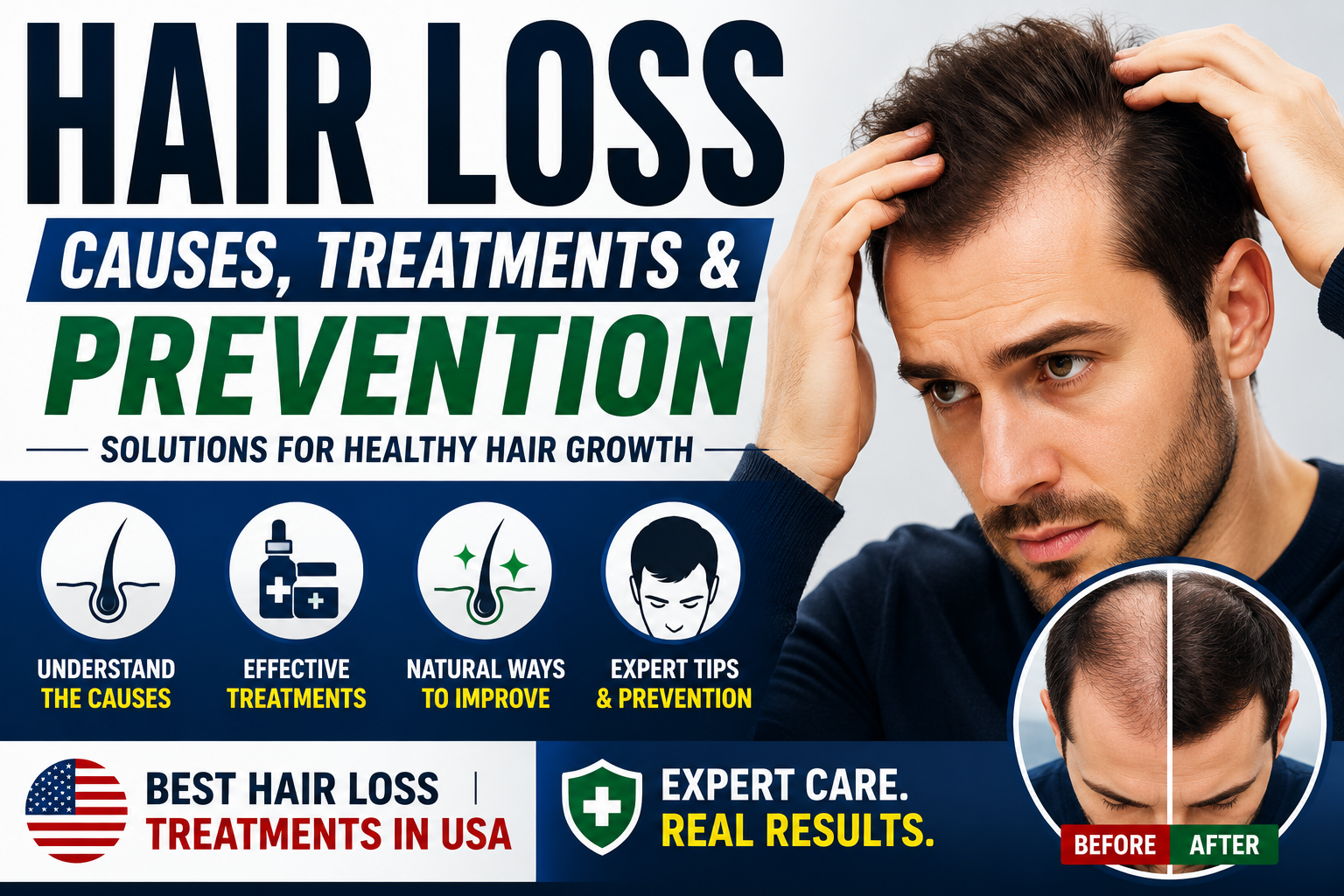
Hair Loss: Causes, Treatments, and Prevention Tips for Healthy Hair Growth
Meta Title: Hair Loss Treatment in the USA: Causes, Prevention & Effective Solutions
Meta Description: Discover the causes of hair loss and the best treatment options available in the USA. Learn about prevention tips, medications, natural remedies, and expert solutions for healthy hair growth.
Hair Loss: Causes, Treatments, and Prevention Tips for Healthy Hair Growth
Hair loss affects millions of men and women across the United States each year. While losing some hair daily is a natural part of the hair growth cycle, excessive hair loss can impact confidence, emotional well-being, and overall quality of life.
Fortunately, modern medicine and advances in hair restoration have made it possible to effectively manage and treat many forms of hair loss. In this comprehensive guide, we’ll explore the common causes of hair loss, available treatments, prevention strategies, and when to seek professional help.
What Is Hair Loss?
Hair loss, medically known as alopecia, occurs when hair falls out faster than it grows back. Hair loss can affect the scalp, eyebrows, beard, or other areas of the body and may be temporary or permanent.
The average person loses approximately 50 to 100 hairs per day. However, excessive shedding or visible thinning may indicate an underlying issue.
Common Types of Hair Loss
Understanding the type of hair loss is essential for choosing the most effective treatment.
1. Androgenetic Alopecia (Pattern Baldness)
Androgenetic alopecia is the most common type of hair loss in the United States.
Characteristics include:
- Receding hairline in men
- Thinning at the crown
- Diffuse hair thinning in women
- Gradual progression over time
Genetics and hormones are the primary causes of this condition.
2. Alopecia Areata
Alopecia areata is an autoimmune disorder in which the immune system attacks hair follicles.
Symptoms include:
- Round patches of hair loss
- Sudden hair shedding
- Possible eyebrow or beard hair loss
3. Telogen Effluvium
This temporary condition occurs when a large number of hair follicles enter the resting phase of the hair cycle.
Common triggers include:
- Severe stress
- Illness
- Surgery
- Pregnancy
- Rapid weight loss
- Nutritional deficiencies
4. Traction Alopecia
Traction alopecia results from repeated tension on the hair caused by:
- Tight hairstyles
- Hair extensions
- Braids
- Chemical treatments
Early intervention can prevent permanent damage.
What Causes Hair Loss?
Hair loss can result from numerous factors, including:
Genetics
Family history remains one of the strongest predictors of hair loss.
Hormonal Changes
Hormonal fluctuations may contribute to hair loss due to:
- Pregnancy
- Menopause
- Thyroid disorders
- Polycystic ovary syndrome (PCOS)
Nutritional Deficiencies
Deficiencies in essential nutrients can affect hair growth, including:
- Iron
- Zinc
- Vitamin D
- Protein
- Biotin
- Vitamin B12
Stress
Physical and emotional stress can disrupt the normal hair growth cycle, resulting in increased shedding.
Medical Conditions
Certain medical conditions can cause hair loss, such as:
- Thyroid disease
- Autoimmune disorders
- Scalp infections
- Lupus
- Diabetes
Medications
Some medications may contribute to hair loss, including:
- Chemotherapy drugs
- Blood pressure medications
- Antidepressants
- Blood thinners
- Hormonal medications
Signs and Symptoms of Hair Loss
Common symptoms include:
- Excessive hair shedding
- Receding hairline
- Thinning at the crown
- Widening hair part
- Bald patches
- Reduced hair density
- Increased hair breakage
Early recognition often leads to better treatment outcomes.
Best Hair Loss Treatments Available in the USA
Several effective treatment options are available depending on the cause and severity of hair loss.
1. Minoxidil (Rogaine)
Minoxidil is an FDA-approved topical treatment widely used in the United States.
Benefits include:
- Stimulating hair growth
- Slowing hair loss
- Improving hair thickness
- Suitable for both men and women
Results typically become noticeable after three to six months of consistent use.
2. Finasteride (Propecia)
Finasteride is an FDA-approved oral medication for male pattern baldness.
It works by:
- Reducing DHT hormone levels
- Slowing hair follicle shrinkage
- Promoting hair regrowth
This treatment requires medical supervision.
3. Platelet-Rich Plasma (PRP) Therapy
PRP therapy has become increasingly popular in dermatology and hair restoration clinics.
The procedure involves:
- Drawing the patient’s blood
- Concentrating growth factors
- Injecting platelet-rich plasma into the scalp
Potential benefits include improved hair density and reduced hair shedding.
4. Hair Transplant Surgery
Hair transplantation offers a permanent solution for many individuals experiencing pattern baldness.
Popular procedures include:
- Follicular Unit Extraction (FUE)
- Follicular Unit Transplantation (FUT)
Hair transplant procedures performed in the USA often provide natural-looking, long-lasting results.
5. Low-Level Laser Therapy (LLLT)
Laser devices may help stimulate hair follicles and improve hair growth.
Benefits may include:
- Increased blood circulation
- Reduced inflammation
- Improved hair thickness
Natural Remedies for Hair Loss
While scientific evidence varies, some natural approaches may support healthy hair growth.
Popular options include:
- Rosemary oil
- Pumpkin seed oil
- Scalp massage
- Aloe vera
- Omega-3 fatty acids
- Balanced nutrition
Natural remedies should complement—not replace—professional treatment when necessary.
Best Foods for Healthy Hair Growth
Nutrition plays a critical role in maintaining healthy hair.
Consider adding these foods to your diet:
Protein-Rich Foods
- Eggs
- Fish
- Chicken
- Greek yogurt
- Lean meats
Iron-Rich Foods
- Spinach
- Red meat
- Lentils
- Beans
Healthy Fats
- Salmon
- Walnuts
- Avocados
- Chia seeds
Vitamin-Rich Foods
- Citrus fruits
- Sweet potatoes
- Berries
- Leafy green vegetables
A balanced diet supports both scalp health and hair growth.
How to Prevent Hair Loss
Although not all hair loss is preventable, certain habits may help reduce your risk.
Healthy Hair Care Tips:
- Avoid excessive heat styling
- Limit harsh chemical treatments
- Use gentle shampoos
- Avoid tight hairstyles
- Manage stress effectively
- Maintain a healthy diet
- Get adequate sleep
- Treat underlying medical conditions
Consistency in hair care practices can help preserve long-term hair health.
When Should You See a Doctor?
Consult a healthcare provider or dermatologist if you experience:
- Sudden hair loss
- Patchy bald spots
- Significant hair thinning
- Scalp pain or irritation
- Hair loss accompanied by other symptoms
- Persistent shedding lasting more than several months
Early diagnosis can improve treatment success.
Frequently Asked Questions
Can hair loss be reversed?
In many cases, hair loss can be slowed, stopped, or partially reversed depending on the underlying cause and treatment approach.
Does stress cause hair loss?
Yes. Physical and emotional stress can trigger temporary hair shedding known as telogen effluvium.
How long does hair regrowth take?
Hair regrowth varies by individual but typically requires three to six months before noticeable improvements occur.
Are hair transplants permanent?
Yes. Modern hair transplant procedures generally provide permanent and natural-looking results.
Final Thoughts
Hair loss is a common condition that affects millions of Americans, but effective treatment options are available. Whether your hair loss is caused by genetics, hormones, stress, or medical conditions, early intervention and professional guidance can significantly improve outcomes.
Maintaining healthy lifestyle habits, seeking timely medical advice, and choosing evidence-based treatments can help you protect your hair and restore confidence.