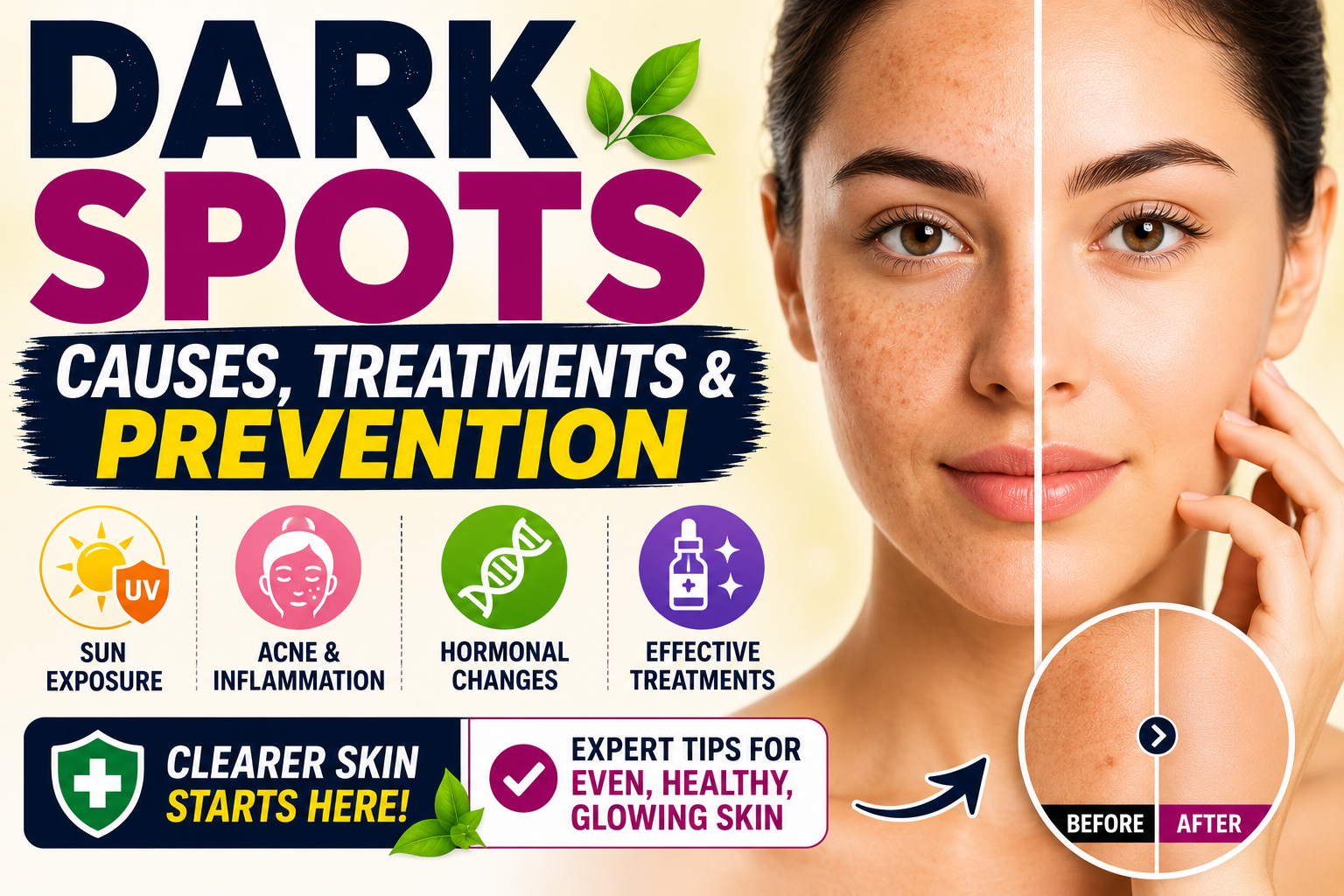
Dark Spots: Causes, Treatments, and Prevention Tips for Clearer Skin
Meta Title: Dark Spots Treatment: Causes, Prevention & Best Solutions for Clear Skin
Meta Description: Learn about the causes of dark spots, effective treatments, prevention tips, and dermatologist-approved solutions to achieve clearer and healthier skin.
Dark Spots: Causes, Treatments, and Prevention Tips for Clearer Skin
Dark spots, also known as hyperpigmentation, are one of the most common skin concerns affecting millions of people in the United States. These patches of skin become darker than the surrounding area due to excess melanin production and can appear on the face, hands, shoulders, chest, and other areas exposed to the sun.
While dark spots are generally harmless, they can affect self-confidence and skin appearance. Fortunately, various treatments and preventive strategies can help reduce their appearance and promote healthier, more even-toned skin.
In this comprehensive guide, we’ll explore the causes of dark spots, effective treatment options, natural remedies, and expert prevention tips.
What Are Dark Spots?
Dark spots are areas of skin discoloration caused by an overproduction of melanin, the pigment responsible for skin color. These spots can vary in size, color, and severity.
Common types of dark spots include:
- Age spots (liver spots)
- Sun spots
- Post-inflammatory hyperpigmentation
- Melasma
- Acne-related dark spots
- Freckles
Although most dark spots are benign, some skin changes should be evaluated by a healthcare professional.
Common Causes of Dark Spots
Understanding the cause of hyperpigmentation is essential for selecting the most effective treatment.
1. Sun Exposure
Ultraviolet (UV) radiation is one of the leading causes of dark spots. Prolonged sun exposure stimulates melanin production, resulting in:
- Sun spots
- Age spots
- Uneven skin tone
Areas frequently exposed to sunlight are particularly vulnerable.
2. Acne and Skin Inflammation
After acne lesions heal, they may leave behind dark marks known as post-inflammatory hyperpigmentation (PIH).
Other inflammatory conditions that can cause dark spots include:
- Eczema
- Psoriasis
- Skin injuries
- Allergic reactions
3. Hormonal Changes
Hormonal fluctuations can trigger melasma, a common form of hyperpigmentation that often affects women.
Common hormonal triggers include:
- Pregnancy
- Birth control pills
- Hormone replacement therapy
- Endocrine disorders
4. Aging
As people age, repeated sun exposure and natural skin changes can contribute to the development of age spots.
5. Certain Medications
Some medications may increase sensitivity to sunlight or affect pigmentation, including:
- Certain antibiotics
- Hormonal medications
- Chemotherapy drugs
- Anti-seizure medications
Types of Dark Spots
Sun Spots (Solar Lentigines)
Sun spots develop after years of UV exposure and typically appear on:
- Face
- Hands
- Shoulders
- Arms
Melasma
Melasma often appears as larger patches of pigmentation and commonly affects:
- Forehead
- Cheeks
- Upper lip
- Chin
Post-Inflammatory Hyperpigmentation
This type develops after skin inflammation or injury and is common following acne breakouts.
Best Treatments for Dark Spots in the USA
Many effective treatments are available through dermatologists, skincare professionals, and over-the-counter products.
1. Topical Retinoids
Retinoids help accelerate skin cell turnover and gradually reduce pigmentation.
Benefits include:
- Improved skin texture
- Reduced discoloration
- Increased collagen production
- Prevention of future breakouts
2. Hydroquinone
Hydroquinone is one of the most widely used skin-lightening agents.
It works by:
- Reducing melanin production
- Fading existing dark spots
- Improving skin tone uniformity
Hydroquinone should be used under professional guidance.
3. Vitamin C Serums
Vitamin C is a powerful antioxidant that may help:
- Brighten skin tone
- Reduce pigmentation
- Protect against environmental damage
- Support collagen production
4. Azelaic Acid
Azelaic acid is commonly recommended for:
- Acne-related dark spots
- Melasma
- Sensitive skin
It helps reduce inflammation and pigmentation simultaneously.
5. Chemical Peels
Chemical peels remove damaged skin layers and stimulate new cell growth.
Benefits include:
- Reduced hyperpigmentation
- Improved skin texture
- Brighter complexion
- Reduced acne scars
6. Laser Therapy
Laser treatments have become increasingly popular in the United States for treating stubborn pigmentation.
Popular laser treatments include:
- Fractional lasers
- Q-switched lasers
- Intense Pulsed Light (IPL) therapy
Professional evaluation is necessary to determine the most appropriate treatment.
7. Microneedling
Microneedling stimulates collagen production and may help reduce:
- Acne scars
- Hyperpigmentation
- Uneven skin texture
Natural Remedies That May Help
Although scientific evidence varies, some individuals find improvement with natural approaches.
Common natural remedies include:
- Aloe vera
- Green tea extract
- Licorice root extract
- Niacinamide
- Turmeric-based skincare products
Natural remedies should be used cautiously, especially on sensitive skin.
Daily Skincare Routine for Dark Spots
A consistent skincare routine is essential for managing hyperpigmentation.
Morning Routine:
- Gentle cleanser
- Vitamin C serum
- Moisturizer
- Broad-spectrum sunscreen (SPF 30 or higher)
Evening Routine:
- Gentle cleanser
- Retinoid or treatment serum
- Moisturizer
Consistency is often more important than using multiple products.
Importance of Sunscreen
Sunscreen is one of the most effective ways to prevent and manage dark spots.
Choose a sunscreen that:
- Provides broad-spectrum protection
- Has SPF 30 or higher
- Is applied daily
- Is reapplied every two hours when outdoors
Without proper sun protection, dark spots may worsen despite treatment.
How to Prevent Dark Spots
Several habits can help reduce the risk of developing hyperpigmentation.
Prevention Tips:
- Wear sunscreen every day
- Avoid excessive sun exposure
- Wear protective clothing
- Avoid picking acne lesions
- Treat skin inflammation promptly
- Use gentle skincare products
- Maintain a consistent skincare routine
Prevention is often easier than treatment.
When to See a Dermatologist
Consult a dermatologist if you experience:
- Rapidly changing skin spots
- Irregular pigmentation
- Painful or bleeding lesions
- Severe hyperpigmentation
- Dark spots that do not improve with treatment
Professional evaluation can help determine the underlying cause and appropriate treatment plan.
Frequently Asked Questions
Are dark spots permanent?
Many dark spots can fade over time or improve significantly with appropriate treatment.
How long does treatment take?
Results vary depending on the cause and treatment method, but noticeable improvements often require several weeks to months.
Can sunscreen remove dark spots?
Sunscreen does not remove existing spots but helps prevent them from worsening and supports treatment effectiveness.
Are laser treatments safe?
When performed by qualified professionals, laser treatments are generally considered safe and effective.
Final Thoughts
Dark spots are a common skin concern, but numerous treatment options are available to improve skin tone and appearance. Whether caused by sun exposure, acne, hormones, or aging, early intervention and consistent skincare can make a significant difference.
Combining professional treatments, evidence-based skincare products, sun protection, and healthy lifestyle habits can help you achieve clearer, healthier-looking skin over time.