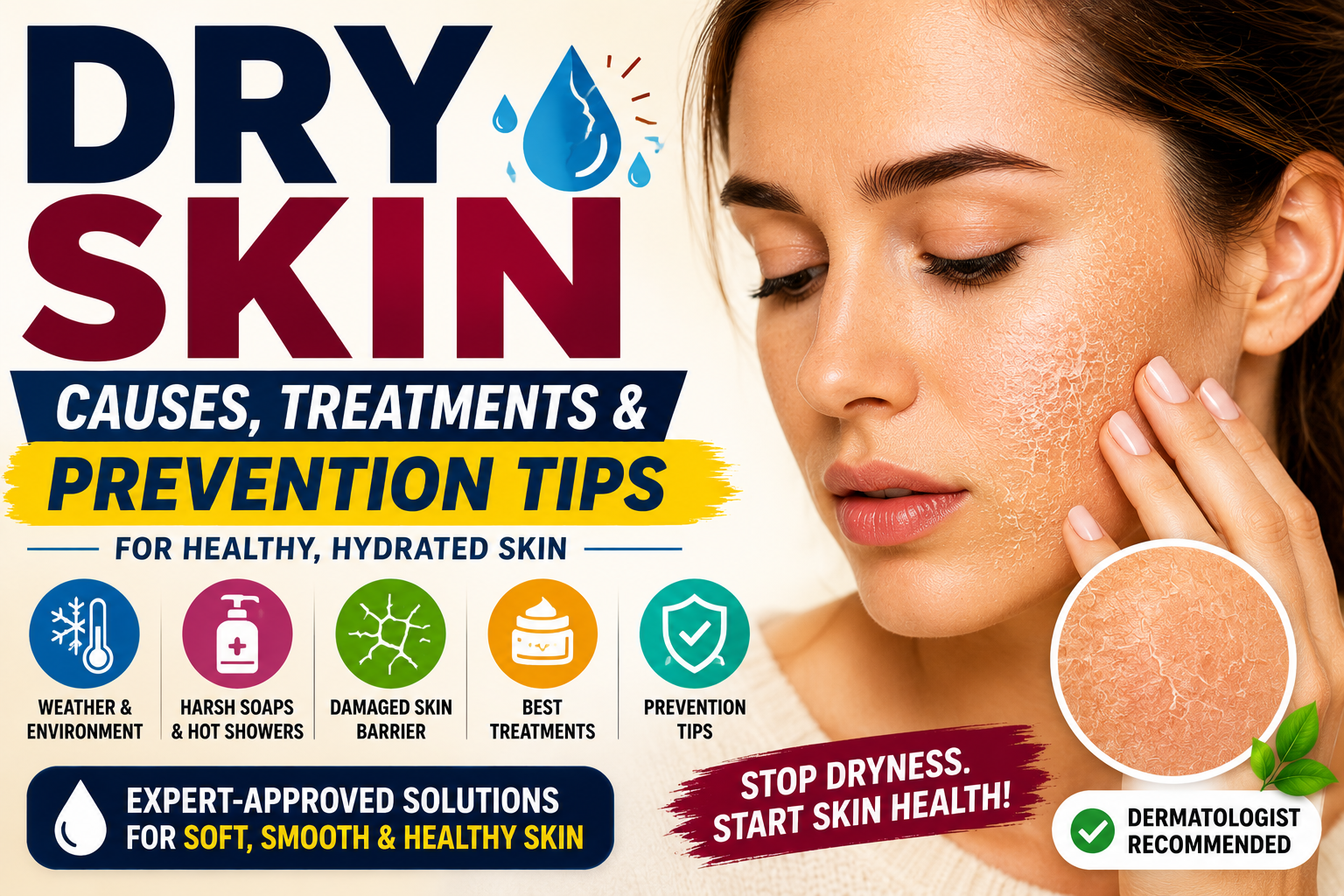
Dry Skin: Causes, Symptoms, Treatments, and Prevention Tips for Healthier Skin
Meta Title: Dry Skin Treatment: Causes, Symptoms & Best Remedies for Healthy Skin
Meta Description: Learn about the causes of dry skin, effective treatments, home remedies, and prevention tips to keep your skin healthy, hydrated, and protected year-round.
Dry Skin: Causes, Symptoms, Treatments, and Prevention Tips for Healthier Skin
Dry skin is one of the most common skin concerns affecting millions of people across the United States. While occasional dryness is normal, persistent dry skin can cause discomfort, itching, irritation, and even increase the risk of skin infections.
Environmental factors, aging, lifestyle habits, and certain medical conditions can all contribute to dry skin. Fortunately, effective treatments and preventive measures can help restore moisture and maintain healthy skin.
In this comprehensive guide, we’ll explore the causes of dry skin, common symptoms, treatment options, and expert tips for preventing dryness and improving skin health.
What Is Dry Skin?
Dry skin, medically referred to as xerosis, occurs when the skin loses too much water and natural oils. This lack of moisture compromises the skin’s protective barrier, causing the skin to become rough, flaky, itchy, and irritated.
Dry skin can affect any part of the body but is most commonly found on:
- Hands
- Face
- Arms
- Legs
- Elbows
- Feet
While dry skin can occur at any age, it becomes more common as people get older.
Common Symptoms of Dry Skin
Symptoms of dry skin can vary depending on severity and underlying causes.
Common signs include:
- Rough or flaky skin
- Tightness after washing
- Itching
- Redness
- Cracked skin
- Peeling
- Scaling
- Increased sensitivity
- Fine lines or rough texture
Severe dryness may lead to painful cracks and inflammation.
What Causes Dry Skin?
Several factors can contribute to dry skin.
1. Weather and Climate
Environmental conditions are among the most common causes of dry skin.
Factors include:
- Cold weather
- Low humidity
- Wind exposure
- Indoor heating
- Air conditioning
Winter months often worsen skin dryness.
2. Hot Showers and Frequent Washing
Long, hot showers can strip the skin of its natural oils.
Other contributing habits include:
- Frequent hand washing
- Excessive bathing
- Using harsh soaps
- Over-cleansing the skin
3. Aging
As people age, the skin naturally produces less oil, making older adults more susceptible to dryness.
4. Skin Conditions
Certain skin disorders can increase the risk of dry skin, including:
- Eczema
- Psoriasis
- Contact dermatitis
- Seborrheic dermatitis
5. Medical Conditions
Underlying health conditions may contribute to chronic dry skin, such as:
- Diabetes
- Thyroid disorders
- Kidney disease
- Nutritional deficiencies
6. Certain Medications
Some medications can reduce skin moisture levels, including:
- Diuretics
- Acne medications
- Cholesterol-lowering drugs
- Certain cancer treatments
Risk Factors for Dry Skin
You may be more likely to develop dry skin if you:
- Are over the age of 40
- Live in cold or dry climates
- Wash your hands frequently
- Swim regularly
- Have a history of skin conditions
- Work in environments that require frequent exposure to water
Best Treatments for Dry Skin
Fortunately, several effective treatments can help restore moisture and improve skin health.
1. Use Moisturizers Regularly
Moisturizers help repair the skin barrier and prevent moisture loss.
Look for products containing:
- Hyaluronic acid
- Ceramides
- Glycerin
- Shea butter
- Petrolatum
- Dimethicone
Apply moisturizer immediately after bathing for best results.
2. Choose Gentle Cleansers
Harsh soaps can worsen dryness.
Instead, use:
- Fragrance-free cleansers
- Soap-free washes
- Hydrating body washes
- Sensitive skin products
3. Use Humidifiers
Humidifiers can increase indoor moisture levels and help prevent excessive skin dryness, especially during winter.
4. Avoid Excessive Heat Exposure
Reduce exposure to:
- Very hot showers
- Heating vents
- Prolonged sun exposure
Lukewarm water is generally better for maintaining skin hydration.
Home Remedies for Dry Skin
Several home remedies may help support skin hydration.
Coconut Oil
Coconut oil contains fatty acids that may help improve the skin barrier and reduce dryness.
Oatmeal Baths
Colloidal oatmeal baths may help:
- Relieve itching
- Reduce inflammation
- Improve moisture retention
Aloe Vera
Aloe vera gel may soothe irritated and dry skin while supporting skin repair.
Petroleum Jelly
Petroleum-based products help seal moisture into the skin and protect against water loss.
Best Skincare Routine for Dry Skin
A consistent skincare routine can significantly improve skin hydration.
Morning Routine:
- Gentle cleanser
- Hydrating serum
- Moisturizer
- Broad-spectrum sunscreen
Evening Routine:
- Mild cleanser
- Hydrating treatment
- Thick moisturizer or cream
Consistency is key to maintaining healthy skin.
Foods That Support Healthy Skin
Nutrition also plays an important role in skin health.
Healthy Fats
Consume foods rich in healthy fats, including:
- Salmon
- Avocados
- Walnuts
- Olive oil
- Chia seeds
Antioxidant-Rich Foods
Antioxidants help protect skin cells from damage.
Examples include:
- Berries
- Leafy greens
- Citrus fruits
- Carrots
- Sweet potatoes
Stay Hydrated
Drinking adequate water supports overall body function and may contribute to healthier skin.
How to Prevent Dry Skin
Preventive habits can help reduce future skin problems.
Prevention Tips:
- Moisturize daily
- Avoid long hot showers
- Use gentle skincare products
- Wear protective clothing in cold weather
- Use sunscreen daily
- Drink sufficient fluids
- Use a humidifier during dry seasons
- Avoid irritating chemicals and fragrances
Simple lifestyle adjustments can significantly improve skin health.
When to See a Doctor
Consult a healthcare professional or dermatologist if you experience:
- Severe itching
- Cracked or bleeding skin
- Persistent redness
- Signs of infection
- Dry skin that doesn’t improve with treatment
- Extensive peeling or inflammation
Professional evaluation may identify underlying medical conditions requiring treatment.
Frequently Asked Questions
Is dry skin permanent?
Most cases of dry skin can be effectively managed with proper skincare and lifestyle changes.
Does drinking water cure dry skin?
Hydration supports overall health, but topical moisturizers are often necessary to treat dry skin directly.
What is the best moisturizer for dry skin?
Products containing ceramides, hyaluronic acid, glycerin, and petrolatum are often effective.
Can weather cause dry skin?
Yes. Cold temperatures, low humidity, and indoor heating commonly contribute to dry skin.
Final Thoughts
Dry skin is a common but manageable condition that affects people of all ages. Understanding the underlying causes, using appropriate skincare products, and adopting healthy habits can significantly improve skin hydration and comfort.
If symptoms persist or worsen, consulting a healthcare provider or dermatologist can help identify the underlying cause and determine the most effective treatment plan.